



From Complete Response to MRD: A Paradigm Shift in Multiple Myeloma Treatment Evaluation
- 등록일 : 2026-02-03
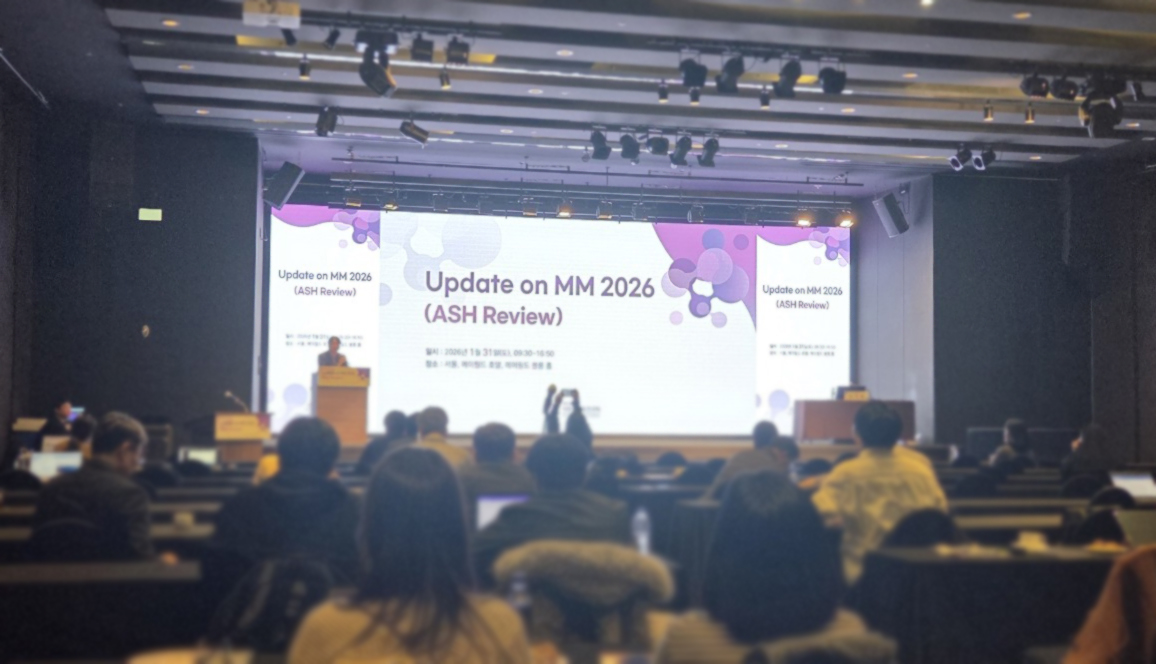
An analysis suggests that the standard for evaluating treatment outcomes in multiple myeloma is rapidly shifting from a focus on Complete Response (CR) to Minimal Residual Disease (MRD).
At the “ASH Review” session held on January 31, the Multiple Myeloma Working Party of the Korean Society of Hematology cited key presentations from the recent American Society of Hematology (ASH) Annual Meeting, noting that the depth and durability of remission were repeatedly emphasized as critical determinants of long-term patient outcomes. This reflects a transition away from assessing treatment response based solely on conventional numerical criteria, toward precision strategies grounded in the sensitive detection of residual malignant cells.
In addition to bone marrow–based next-generation flow (NGF) MRD testing, serum mass spectrometry–based blood MRD assays and circulating tumor cell (CTC) analysis are gaining attention as highly sensitive evaluation tools. Multiple clinical studies have reported improved progression-free survival (PFS) and overall survival (OS) among patients who maintained MRD-negative status.
In particular, mass spectrometry and CTC-based peripheral residual disease (PRD) monitoring demonstrated practical applicability in real-world clinical settings. In certain scenarios, these approaches showed potential to partially complement or reduce the need for repeated bone marrow examinations, raising expectations for improved patient convenience.
During the session, experts stated, “MRD has moved beyond being a research endpoint and is now a key clinical tool guiding treatment intensity adjustments and maintenance therapy decisions.” They added that multiple myeloma treatment has entered an era of precision medicine focused on how deeply and how sustainably malignant cells can be suppressed.
In line with this evolving landscape, Dow Biomedica, a company specializing in in vitro diagnostic medical devices, is accelerating efforts to establish an optimized MRD evaluation environment for clinical practice in Korea.
A representative of Dow Biomedica commented, “We are actively reviewing innovative approaches, including Thermo Fisher Scientific’s Binding Site EXENT mass spectrometry-based protein MRD assay and CelLBx Health’s CTC analysis test. We remain committed to providing technical support to help Korean patients access more precise diagnostic tools and make optimal treatment decisions.”