



Asia-Pacific Joint Symposium Highlights Clinical Implications of ctDNA-Based MRD in Solid Tumors
- 등록일 : 2026-01-20
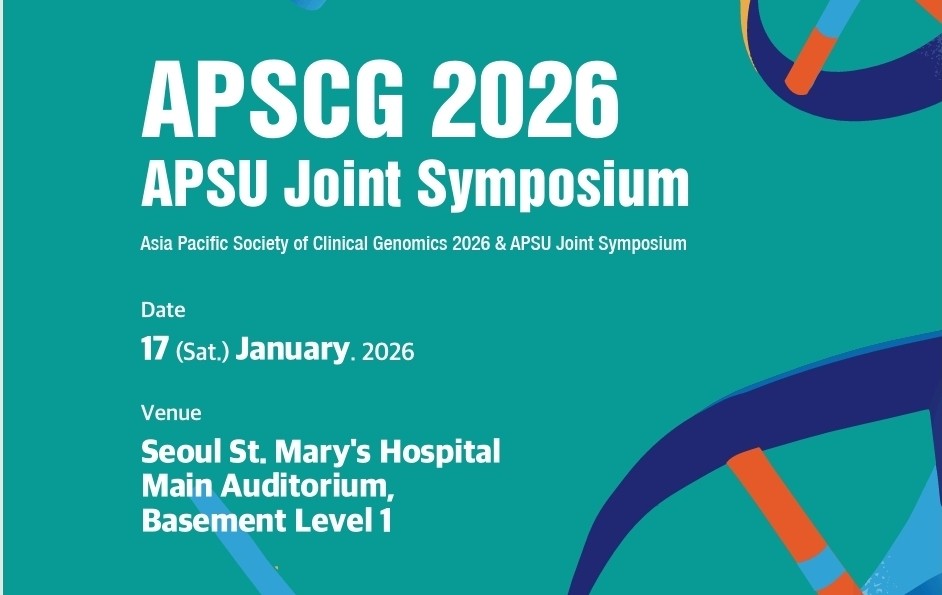
On January 17, the Asia-Pacific Society of Clinical Genomics and the Asia-Pacific Society of Urologic Oncology jointly held a symposium at Seoul St. Mary’s Hospital to discuss the clinical significance and potential applications of ctDNA-based minimal residual disease (MRD).
During the symposium, Professor Inhwa Jung of the Department of Laboratory Medicine at Dong-A University presented a lecture titled “ctDNA and MRD in Solid Tumors.” She emphasized that MRD should not be interpreted as a definitive diagnostic test confirming recurrence, but rather as a biological signal that indicates the direction and risk level of potential relapse at an early stage.
Professor Jung explained that due to its short half-life, circulating tumor DNA (ctDNA) can rapidly reflect changes such as tumor removal, residual disease, or regrowth. This enables the detection of risk signals prior to radiologic confirmation of recurrence. Accordingly, MRD was discussed as a tool for early risk stratification following surgery and for adjusting longitudinal monitoring strategies.
The lecture also introduced a ctDNA-based approach for MRD assessment in solid tumors that enables monitoring through blood samples alone, without requiring tumor tissue. In this context, Guardant Health’s ctDNA-based MRD assay, Reveal, was referenced alongside cases of postoperative recurrence monitoring in colorectal cancer, highlighting its potential utility as a serial surveillance tool.
Meanwhile, key challenges for the clinical implementation of MRD were actively discussed, including result reproducibility, management of false positives, and criteria for interpreting negative results — all central quality control (QC) considerations. Participants reached a consensus that the focus of MRD discussions is shifting from the testing methodology itself toward the reliability and clinical validity of results.
Major ctDNA-based precision diagnostic assays, including Guardant Health’s MRD tests, are available to Korean medical institutions through Dow Biomedica, a company specializing in in vitro diagnostic medical devices, via an overseas reference laboratory model. Given the ultra-low signal levels involved in MRD testing, this approach is currently utilized in clinical practice to ensure consistent quality control and analytical reliability.
The joint symposium was meaningful in underscoring that ctDNA-based MRD in solid tumors is increasingly being discussed as a key component of post-treatment patient management strategies.